Understanding the Long-Term Impact of Post-Polio Syndrome
 By Rotarian Dr. Carles Fontcuberta
Rotarian Dr. Martha Castilleja
Post-polio syndrome (PPS) is a late-onset condition that affects individuals decades after an initial poliomyelitis infection, often emerging quietly and without immediate recognition. In this article, Dr. Carles Fontcuberta and Dr. Martha Castilleja explore the clinical, neurological, and social dimensions of PPS, highlighting its progressive nature and the challenges it presents for both patients and healthcare systems.
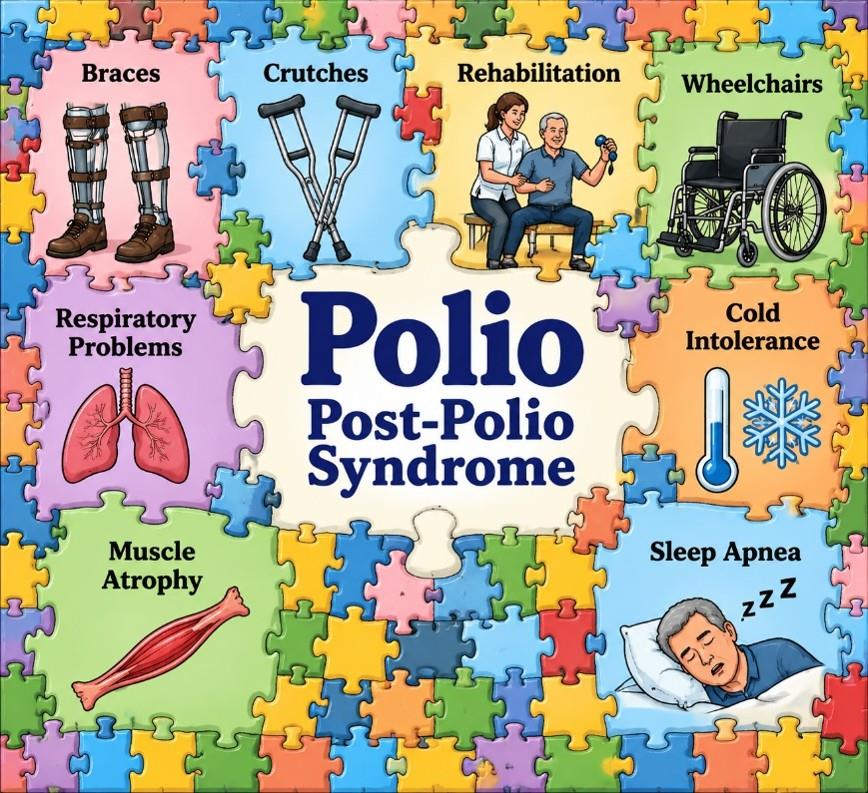
Although global efforts have brought the world closer to eradicating polio, the long-term consequences of the disease continue to impact millions of survivors. PPS illustrates how the effects of past health crises can persist across decades, requiring ongoing medical attention, awareness, and research. Its symptoms, ranging from severe fatigue to progressive muscle weakness, often overlap with other conditions, making diagnosis complex and frequently delayed.
Beyond its clinical aspects, PPS raises important questions about long-term care, accessibility, and quality of life. The article emphasizes the need for interdisciplinary approaches, patient-centered care, and greater awareness among professionals and society. As we move forward in global health, PPS serves as a reminder that eradicating a disease does not necessarily mean ending its impact.